ER Nurse Corgi Dog Lover PNG
A Designer’s First Look: Playful, Punchy, and Purpose-Built for Personality
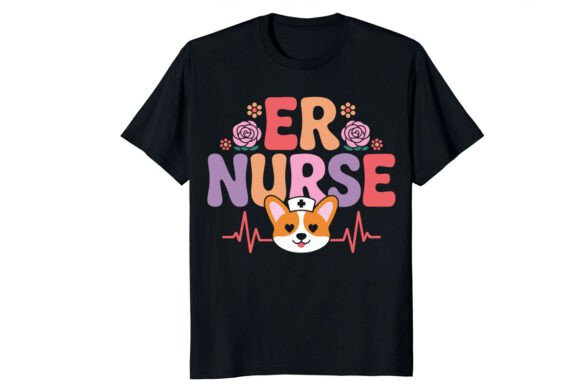
When I opened ER Nurse Corgi Dog Lover PNG, my first thought wasn’t “cute”—it was “clear intent.” This isn’t a vague doodle or a generic clipart mashup. It’s a tightly composed, retro-sunset-inspired graphic that leans into humor without sacrificing legibility or charm. The corgi sits front-and-center with that signature ER nurse cap tilted just so, stethoscope looped over one ear, and a warm, slightly cheeky expression. The lettering is bold but friendly—rounded, mid-century inspired, not overly distressed—and the whole composition fits neatly within a balanced vertical rectangle. That shape alone tells me this was designed for real-world application: think tote bag front panels, left-chest sweatshirt placements, or centered pillow covers.
Where It Shines in Real Embroidery Projects
I recently tested ER Nurse Corgi Dog Lover PNG as the focal design on a custom embroidered cotton canvas tote for a local nurse who’s also a devoted corgi parent. The result? Instant recognition, genuine smiles, and zero confusion about who it’s for. That’s the power of smart thematic alignment—it lands because it’s specific, not broad. As a machine embroidery design, it translates beautifully to medium-weight fabrics like twill, canvas, and fleece-lined sweatshirts. The line weight holds up well in satin stitch for outlines and clean fill stitch for solid areas (like the corgi’s body or the nurse cap), and there’s enough breathing room between elements to avoid thread buildup—even at 8–10 inches wide.
It works especially well for small-batch, handmade product lines: embroidered patches for nursing school grads, baby onesies with simplified versions (trimming fine details first), aprons for vet clinic staff, or even tea towels for dog-loving healthcare workers. As a digital embroidery file, it’s got strong visual hierarchy—no competing focal points—so buyers scanning an Etsy shop or craft fair table instantly grasp the concept. That clarity builds trust fast. When customers see a design that *feels* made for their identity—not just slapped on a shirt—they’re more likely to click “add to cart” and recommend it to peers.
Where to Pause and Plan Ahead
That said, ER Nurse Corgi Dog Lover PNG isn’t plug-and-stitch magic for every surface. On highly textured fabrics like terry cloth or thick fleece, some of the subtler retro shading (especially in the sunset-inspired background gradients) may soften or disappear in dense fill stitch. On stretchy knits—think lightweight t-shirts or baby bodysuits—you’ll need light cutaway stabilizer and possibly reduced stitch density to keep the corgi’s ears and cap brim crisp. And if you’re planning to embroider it on dark fabric, test your thread colors carefully: the original palette relies on contrast, so bright white or sunburst yellow thread will pop where softer creams might recede.
Also worth noting: the small text (“ER NURSE” and “CORGIS ONLY”) is charming—but tiny. If you’re stitching for caps, curved surfaces, or anything under a 3-inch hoop, simplify or omit those lines entirely. Same goes for baby embroidery or holiday embroidery where wash durability matters: avoid heavy satin borders on delicate items unless you’re confident in your thread tension and stabilizer pairing.
Practical Notes Every Embroidery Designer Should Check
- Always test on scrap fabric first—especially with layered garments or blends, since heat and tension behave differently across fiber types.
- Review stitch density before scaling beyond 9 inches; too much fill can cause puckering on lightweight cottons.
- Confirm hoop size compatibility—this design’s proportions suit standard 4×4 and 5×7 hoops well, but double-check your digitized version’s bounding box.
- Inspect small details like the stethoscope curve and corgi paw pads—if they’re rendered as ultra-thin running stitch, they may vanish on coarse weaves.
- Test black-and-white mockups to assess silhouette strength—this design holds up well, but always verify.
- Compare light vs. dark fabric backgrounds in your printable mockup stage—contrast shifts dramatically with thread choice.
- Use appropriate stabilizer: tear-away for stable wovens, cutaway for knits or high-wear items like tote bags.
- Verify licensing before selling finished products or bundling as part of a commercial embroidery collection—this is a Graphics asset intended for T-Shirt Designs, but usage rights vary by seller.
Why It Fits Seamlessly Into Craft Business Strategy
For Etsy sellers and small shop owners, ER Nurse Corgi Dog Lover PNG checks several quiet-but-critical boxes: it’s niche-specific (nurses + corgi lovers = passionate, engaged audience), gift-ready (gag gift energy meets heartfelt personalization), and brand-flexible (works solo or as part of a themed bundle—“Nursing Humor Collection” or “Dog Lover Essentials”). It doesn’t try to be everything, and that’s its strength. In a crowded market of generic “dog mom” or “nurse life” designs, this one stands out because it merges two identities with wit and warmth—not irony, not sarcasm, but affectionate specificity.
As a design asset, it supports multiple revenue streams: direct-to-consumer embroidered patches, sublimated mugs paired with the same graphic, printable mockups for social media listings, or even as a lead magnet for email signups (“Get our free nurse + pet SVG pack”). Its retro-sunset palette also lends itself to cohesive branding—think warm orange, cream, and navy packaging, consistent Instagram feed tones, or matching thank-you cards.
The Bottom Line for Makers Who Value Real-World Results
ER Nurse Corgi Dog Lover PNG isn’t just another funny graphic. It’s a thoughtfully paced, commercially aware embroidery file that respects both the craft and the customer. It performs reliably across common apparel and home goods applications, communicates fast, and invites connection—not just decoration. Whether you’re stitching a one-off personalized gift or building a repeatable craft business around joyful, identity-driven design, this one earns its place in your working library. Just remember: know your fabric, test your threads, honor the details, and let the personality shine through—not the software.